Get a quoate
ISO 14644-4:2022 Standards: How to Design and Build Compliant Pharmaceutical Cleanrooms
Published : 2026-05-07With over a decade of experience in cleanroom engineering, I consider ISO 14644-4:2022 one of the most practical tools in my daily arsenal. Unlike ISO 14644-1, which focuses on classification, Part 4 serves as a “hands-on manual.” It outlines the entire lifecycle of a cleanroom—from the first blueprint to formal commissioning. Its core objective is to ensure that controlled environments consistently meet required cleanliness and environmental standards across industries like pharmaceuticals, electronics, biotechnology, and healthcare. Below, I will break down the core contents of the 2022 standard based on real-world project execution.
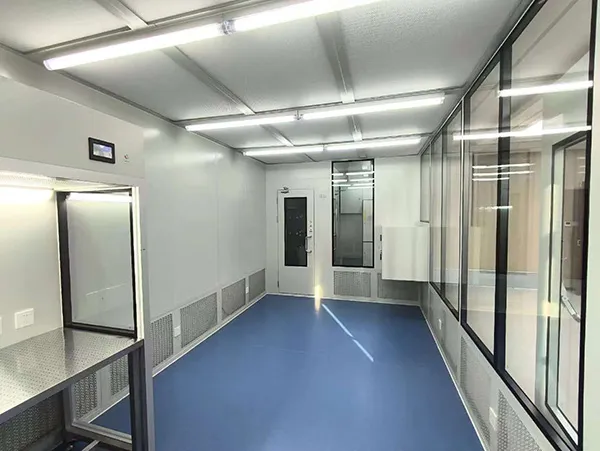
1.Purpose and Scope: Avoiding Wrong Turns
Many clients and contractors misunderstand the application of this standard. Based on my project history, here is how to clarify the scope:
- The Goal: The standard sets the “ground rules” for the design, construction, and start-up phases. The goal is to ensure the finished cleanroom meets the performance specs required for sensitive processes. In pharma, a failure here compromises drug quality; in electronics, it leads to massive losses from scrapped chips.
- New Builds vs. Retrofits: This standard isn’t just for new facilities. I’ve used it to successfully guide old factory renovations through compliance audits. It covers the full lifecycle, whether it’s a greenfield project or a modernization effort.
2.Design Considerations: Details Determine Success
Design is the foundation. If the blueprint is flawed, no amount of construction effort can fix it. Here are the core elements from my design practice:
- Functional Design: Don’t chase high cleanliness levels blindly. Define the purpose first: is it a sterile pharma suite or a semiconductor fab? These have vastly different layouts and ISO classifications.
- Airflow and Ventilation: Airflow is the “soul” of the cleanroom. You must decide between unidirectional (laminar) or non-unidirectional (turbulent) flow. Pressure control is equally vital to prevent outside pollutants from infiltrating the zone.
- Layout and Zoning: The key is preventing cross-contamination. High-cleanliness areas (like filling lines) must be strictly separated from auxiliary zones (like changing rooms) with dedicated personnel and material flows.
- Materials and Surfaces: Choose materials that are “low-shedding and easy to clean”. Sandwich panels and epoxy self-leveling floors are industry standards. Avoiding porous materials like concrete is essential to prevent dust accumulation.
- Environmental Control Systems: Integrate temperature, humidity, and pressure controls early. For instance, electronics fabs often require 23±2°C and 45–65% RH to ensure chip stability.
3.Construction and Installation: Sealing and Filtration
Cleanroom construction allows zero margin for error. Most operational issues stem from construction oversights.
- Material Compatibility: Ensure materials are compatible with the environment. In high-humidity wash areas, wall panels must be moisture-resistant to prevent mold.
- Seal Integrity: This is the most overlooked factor. The airtightness of joints and penetrations determines your pressure stability. Every pipe sleeve and ceiling joint must be meticulously sealed with high-grade sealant to prevent particle leaks.
- HVAC and Filtration: The “heart” of the cleanroom. HEPA and ULPA filters must be installed with absolute precision. After installation, leak testing is mandatory to confirm filtration efficiency.
4.Start-up and Commissioning: Verification, Not Just Inspection
Once construction is done, you cannot simply “flip the switch.” ISO 14644-4:2022 emphasizes a rigorous start-up process.
- Initial System Testing: Run the HVAC and environmental systems continuously for at least 48 hours before formal testing. Testing includes airflow velocity, temperature/humidity control, and pressure stability.
- Performance Verification: Confirm the room meets performance standards via particle counting (per ISO 14644-1), airflow visualization, and pressure validation.
- Documentation and Reporting: This is the key to regulatory approval. Every test, check, and adjustment must be documented. These reports prove compliance and serve as a baseline for future maintenance.
5.Ongoing Monitoring and Maintenance: Long-term Stability
A cleanroom isn’t a “set and forget” asset. Ongoing management is vital.
- Continuous Monitoring: Monitor DP, temperature, humidity, and particle counts 24/7. I’ve seen pharma plants forced to stop production because they missed a clogged HEPA filter due to poor monitoring.
- Preventative Maintenance: Don’t wait for failures. Schedule filter replacements (usually every 1–2 years) and maintain HVAC fans and pumps proactively to prevent performance decay.
6.Compliance and Regulatory Requirements
Your design and build must align with industry-specific laws.
- Industry Compliance: Pharma must meet GMP, while electronics follow semiconductor standards. Clarify these requirements during the design phase to avoid expensive retrofits.
- Compliance Archives: Keep design schemes, construction records, and validation reports for the long term to facilitate regulatory audits.
The true value of ISO 14644-4:2022 is its implementation, not its theory. It provides a roadmap from blueprint to operation, helping you bypass project risks and ensure the long-term stability of your controlled environment. Following this standard is the most efficient path to a compliant, high-performance cleanroom.